
R360.00
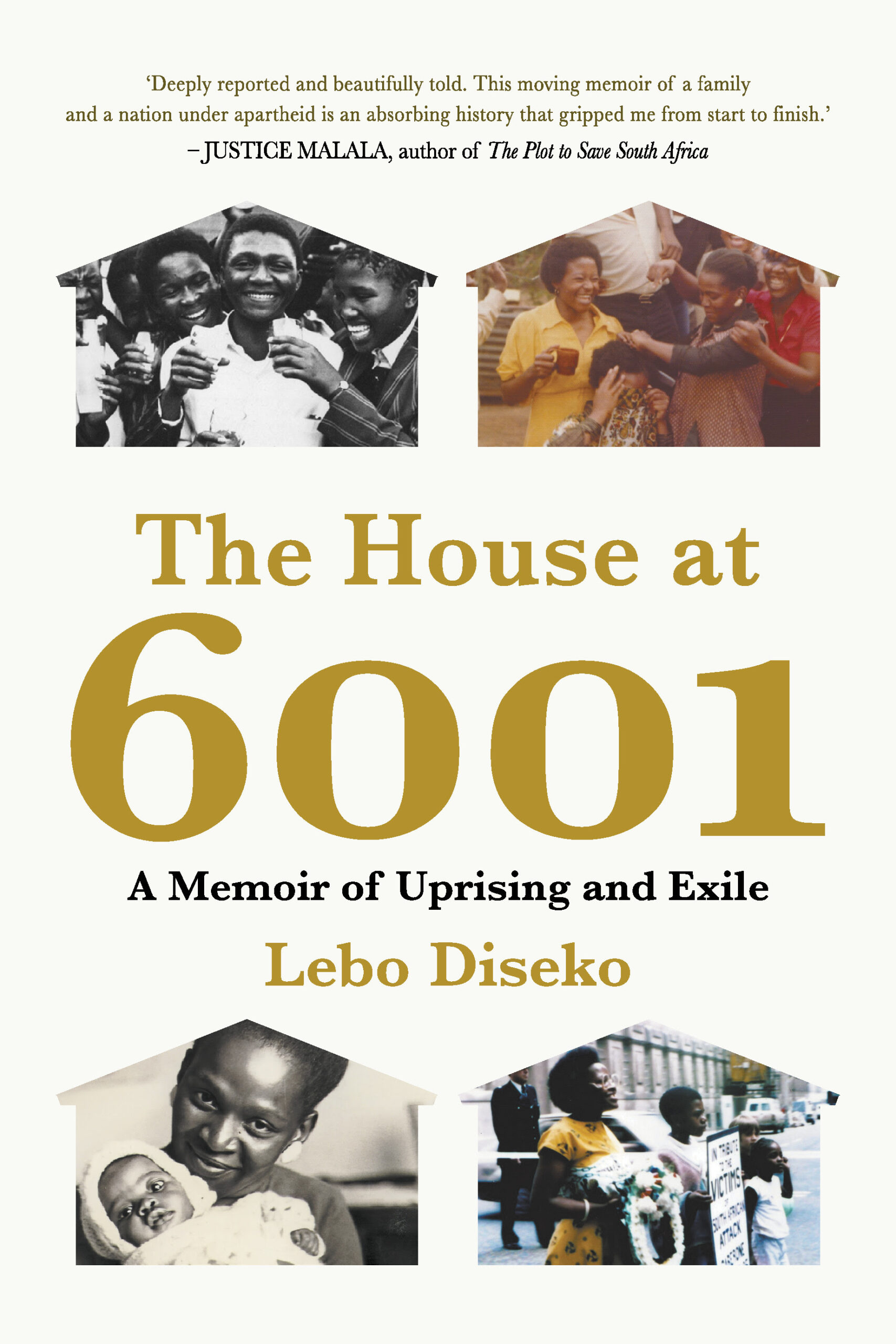
In The House at 6001: A Memoir of Uprising and Exile, Lebo Diseko turns to her own family’s history to explore the legacy of the 1976 Soweto uprising and the long shadow of exile. Through archival research, unsealed documents and intimate interviews, she reconstructs the lives of her parents and relatives, who were deeply involved in the struggle against apartheid while building a family under extraordinary pressure. Moving, insightful and historically rich, this memoir is a powerful reflection on resistance, trauma, identity and the joy that endured in the face of repression.
Description
Lebo Diseko, a respected broadcaster focusing on international news, turns her investigative lens inward to uncover her family’s hidden history.
Born into a hub of political activism in Orlando East, Lebo spent her childhood in exile in England, unaware of her father’s treason charges or her mother’s covert operations. The memoir vividly reconstructs the lives of her parents, Joyce and Mathe, who balanced their roles as young revolutionaries with falling in love and surviving immense state repression.
On 16 June 1976, thousands of Black South African school children marched to protest the introduction of Afrikaans as a medium of instruction. Met with brutal police force, the day descended into deadly violence. Diseko’s family was intimately involved on the front lines: her nineteen-year-old mother, Joyce, covertly helped coordinate the student protests, while her aunt Gaahele treated bullet-wounded children at Baragwanath Hospital. As the state ruthlessly hunted student leaders, Lebo’s father, Mathe, evaded capture for leading a sabotage cell and was smuggled across the border into Botswana, beginning the family’s long and fraught life as stateless refugees.
Drawing on unsealed government documents, historical research, and deeply emotional interviews, Diseko documents the generational impact of trauma, the complexity of linguistic identity, and the extraordinary bravery of her elders. ‘As I listened to my elders talking, it struck me that in the midst of such brutal repression, marriages were made, family bonds were formed, and babies were born,’ says Diseko. ‘Joy was a form of resistance. Up and down South Africa, there were versions of the same experiences – ordinary people who did the extraordinary.’
‘Deeply reported and beautifully told. This moving memoir of a family and a nation under apartheid is an absorbing history that gripped me from start to finish.’ – Justice Malala