R420.00
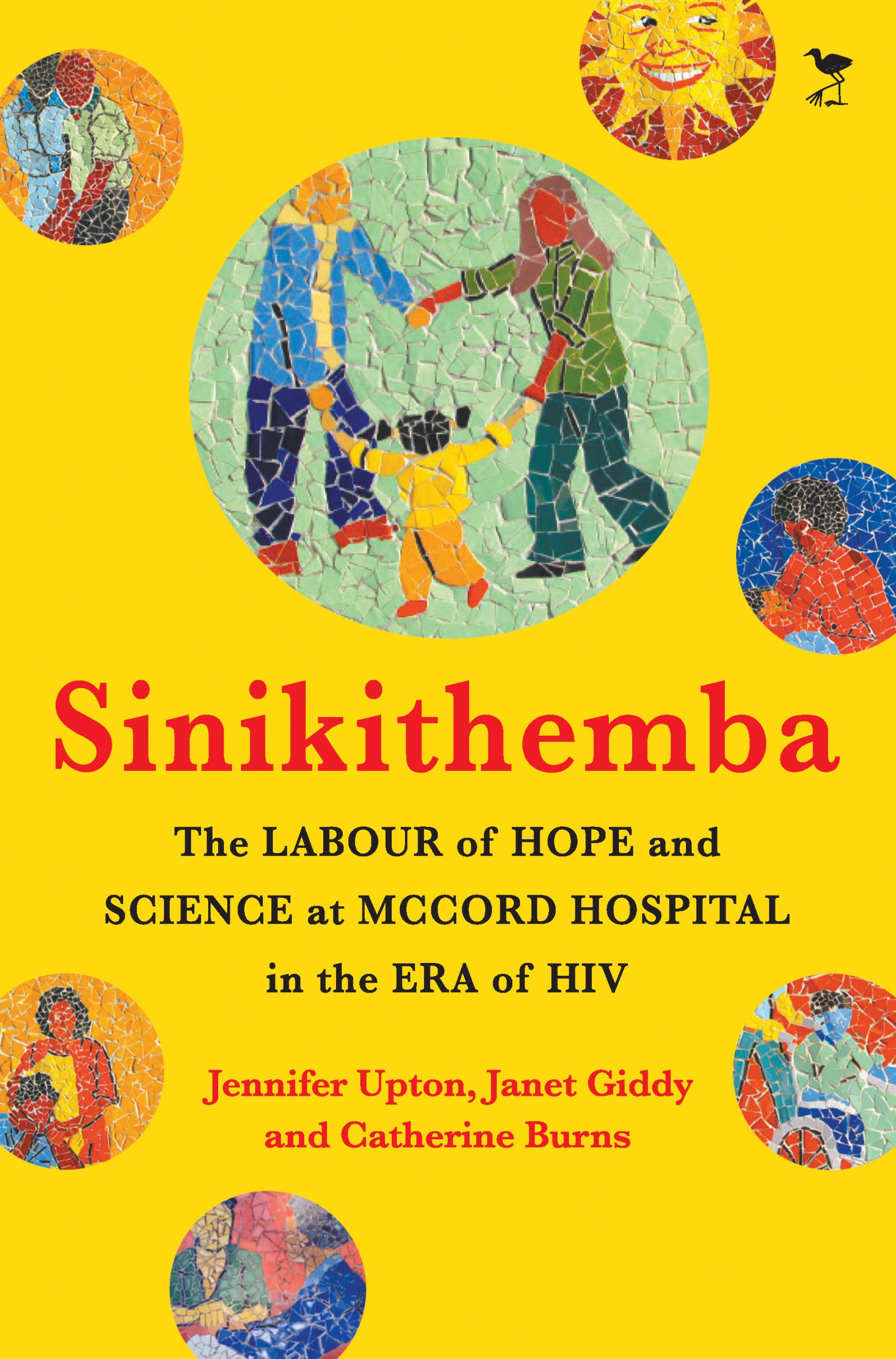
In Sinikithemba: The Labour of Hope and Science at McCord Hospital in the Era of HIV, Jennifer Upton, Janet Giddy and Catherine Burns chronicle the extraordinary history of a Durban hospital that became a global leader in HIV care, treatment and research. Drawing together medicine, faith, community and scientific innovation, the book explores how McCord Hospital responded to one of South Africa’s most devastating public-health crises while sustaining a deeply people-centred ethos. Moving and meticulously researched, it is a powerful history of care, resilience and the collective labour of hope.
Description
During the catastrophic HIV pandemic that escalated into a national crisis in South Africa, a single, remarkable hospital on a high ridge in the port city of Durban emerged as an internationally recognised community of care, treatment and research.
The story of McCord Hospital is an intersection of faith, medical pioneers, community making and knowledge production. Written by two historians and a medical doctor, the book takes its title, meaning ‘give us hope’ or ‘we give hope’ in isiZulu, from the name of McCord’s HIV clinic. The authors trace the arc of McCord Hospital from its humble roots in the early twentieth century through to its role as a global leader in the fight against HIV, bringing to life the tensions, triumphs and challenges of this era.
Sinikithemba is a history of the complex interface between medicine and society. It is impossible to understand the development of McCord’s innovative HIV programmes without coming to an understanding of McCord as a dynamic community of care, as a place sustained by thousands of people in Durban, and as a mission hospital that fought for survival and retained its sense of purpose under successive South African governments.
As McCord scaled up its treatment programme and drew significant support through PEPFAR funding, the wider hospital community expanded to include scientists and professors, clinicians and researchers, midwives and nurses, volunteers and donors, patients and families, provincial officials and philanthropists, pop stars and prayer groups.
At the height of a global crisis, in the city at the epicentre of the South African epidemic, hope was laboured into being at a hospital with a unique ethos and a long history of people-centred care. Sinikithemba tells that story.
‘This is a remarkable and heartbreaking piece of the longer history of biomedicine in Africa that deserves a very wide readership, especially at a time when vital public health infrastructures across the continent and elsewhere are under siege.’ – Lynn Thomas, leading historian of Africa and senior academic, University of Washington
About the Authors
Jennifer Upton is a writer, editor and historian from Durban. She studied at the University of KwaZulu-Natal, completed an MA in History at the University of Warwick, and earned a PhD in English from the University of Cambridge. Her research interests include medical history, life writing, literature and historiography.
Janet Giddy is a family physician with a master’s degree in public health from the University of Cape Town and has completed a Clinical Effectiveness Program at the Harvard School of Public Health. Her experience spans rural health, primary health care, maternal and child health, HIV and TB, and she has also been involved in health education and research.
Catherine Burns is a medical historian and historian of Africa, educated at the University of the Witwatersrand, Johns Hopkins University and Northwestern University. She established the first interdisciplinary medical humanities programme in Southern Africa, and her work focuses on health in African societies, medical systems, women’s and children’s health, epidemics, ethics and inequality. She is based at the University of Johannesburg.