
R290.00
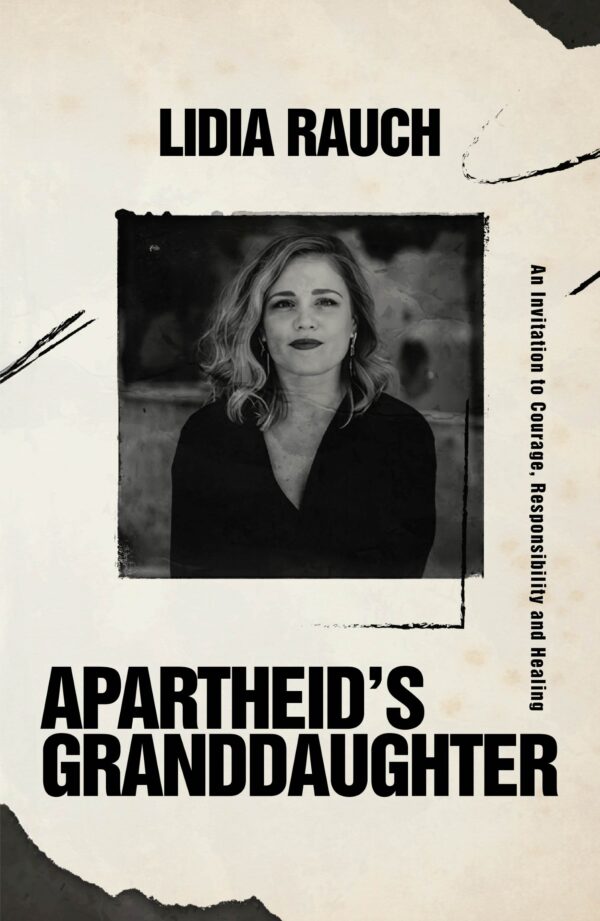
In Apartheid’s Granddaughter, Lidia Rauch reflects on growing up in the shadow of apartheid privilege as the granddaughter of one of its longest-serving ministers. Moving between personal memory, political reality and moral reckoning, she traces her journey from inherited comfort and silence to a deeper understanding of responsibility, justice and repair in South Africa. Fearless, tender and deeply thought-provoking, this memoir is an invitation to confront the past honestly and imagine a more humane future.
Description
Lidia Rauch was born at the crossroads of South Africa’s past and present – the granddaughter of one of apartheid’s longest-serving ministers, raised in a world constructed for her comfort, yet called to reckon with its cost. Her story moves between privilege and pain: from a childhood marked by fracture, to a career within the machinery of government, to the long, uneasy road of reckoning with what it means to be white, Afrikaans, and free in a country still carrying the weight of its past.
In this fearless and tender memoir, Lidia turns toward the truth – dismantling the myths she was raised on, confronting the discomfort she once avoided, and choosing responsibility over denial. Along the way she encounters the people and moments that changed her – from the townships of Cape Town to the rooms where power is brokered – and discovers that freedom is not a gift bestowed by the system, but a commitment we make to one another.
Apartheid’s Granddaughter is not a story of guilt or absolution, but of courage and repair. It’s an invitation to white South Africans to face their inheritance with honesty and courage.
Both intimate and universal, this book reminds us that transformation is possible – and that healing begins when we choose to see ourselves and one another.
About the Author
As the founder of Bloom Enterprise, Lidia Rauch helps people and organisations confront inherited stories, build cultures of fairness and empathy, and move from awareness to action. Her approach is invitational rather than accusatory, creating spaces where inclusion is practised, not performed.